2026 How to Choose the Right Surgical Needles for Your Needs?
Selecting the right surgical needles is crucial for any medical procedure. Surgical needles play a vital role in ensuring successful suturing. According to a report by MarketsandMarkets, the global surgical sutures market is projected to reach $5.8 billion by 2025. This growth highlights the importance of understanding the tools involved in surgical techniques.
Different procedures require specific types of needles to achieve optimal results. For instance, curved needles are often used for deep tissue suturing, while straight needles serve well for surface tissues. The choice of material, size, and design can significantly affect the outcome. Keeping abreast of advancements in needle technology is essential; however, clinicians sometimes overlook this aspect.
Understanding your specific needs is key. Are you dealing with delicate tissues or robust ones? Reflecting on past experiences can guide your decisions. Consider the needle's potential to cause trauma or complications. A well-informed choice can enhance both patient safety and surgical efficiency. Surgical needles should never be an afterthought; they are fundamental to effective stitching and healing.

Understanding the Types of Surgical Needles Available in 2026
Understanding the types of surgical needles available in 2026 is crucial for optimal patient outcomes. Surgical needles come in various shapes, sizes, and materials, tailored for specific procedures. Some common types include cutting needles, tapered needles, and reverse cutting needles. Cutting needles are designed for tough tissue, while tapered needles are perfect for delicate structures. According to a recent industry report, 65% of surgeons prefer taper point needles for suturing soft tissues.
Material selection is also essential. Stainless steel remains the standard for its durability and resistance to corrosion. However, absorbable materials are gaining popularity in specific contexts. Data indicates that nearly 40% of surgical procedures now utilize absorbable sutures, reflecting a shift towards less invasive practices. This trend supports faster recovery times and reduces patient discomfort.
Surgical needles must match the procedure type and tissue characteristics. An inappropriate choice can lead to complications like inadequate closure or increased infection risk. Despite advancements, a survey revealed that over 25% of healthcare professionals still struggle with needle selection. Continuous education and technology adoption remain crucial for improving outcomes and minimizing risks.
Factors to Consider When Choosing Surgical Needles for Your Procedure
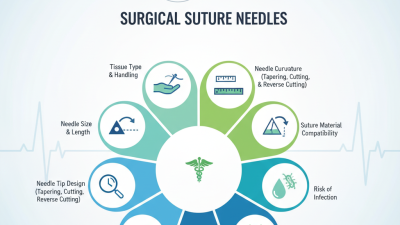
Choosing the right surgical needles is crucial for successful procedures. One key factor to consider is the needle's size and type. Needles come in various sizes, expressed in gauges. A larger gauge indicates a smaller needle. For delicate tissues, finer needles minimize trauma. For tougher tissues, sturdier needles are essential. This choice can impact healing time and patient comfort.
Another essential consideration is the needle material. Stainless steel is commonly used for its strength and reliability. However, some procedures benefit from coated needles that reduce friction. These coatings can enhance maneuverability and decrease tissue damage. It is vital to weigh the pros and cons of each material based on the specific procedure.
Surgical techniques and the procedure's complexity also influence the choice of needle. Different techniques might require distinct needle configurations, such as curved versus straight needles. Understanding these nuances allows for better decision-making. Not every needle suits every situation. Therefore, reflecting on past experiences can guide current selections.
Evaluating Needle Materials and Their Impact on Performance
Choosing the right surgical needle involves understanding needle materials and their performance impact. Stainless steel is the most common choice. It is strong and corrosion-resistant. However, not all stainless steels are alike. Some contain specific alloys that improve flexibility and strength. This can affect the ease of suturing.
Another material to consider is polypropylene. It offers excellent tensile strength and is less prone to bending. However, its rigidity can be a downside when working on delicate tissues. Evaluating these materials requires precision. You want needles that provide optimal performance without causing unnecessary trauma to the tissue.
When choosing a needle, think about the procedure. What type of suturing technique will you use? Consider the tissue being sutured. A flexible needle might be ideal for soft tissues. In contrast, a stiffer needle may work better for dense tissue. Pay attention to how the needle feels during use. A good fit can greatly improve your technique. You may find that your preferred needle material varies from one procedure to another. Adjusting your choices based on this feedback is essential for improving your skills.
2026 How to Choose the Right Surgical Needles for Your Needs? - Evaluating Needle Materials and Their Impact on Performance
| Needle Type |
Material |
Coating |
Recommended Use |
Performance Rating |
| Cutting Needle |
Stainless Steel |
Silicone Coated |
Skin Suturing |
9/10 |
| Ballpoint Needle |
Stainless Steel |
PTFE Coated |
Soft Tissue Suturing |
8/10 |
| Taper Point Needle |
Titanium |
None |
Visceral Suturing |
10/10 |
| Reverse Cutting Needle |
Stainless Steel |
None |
Dense Tissue Suturing |
9/10 |
| Spinal Needle |
Stainless Steel |
None |
Epidural Procedures |
8/10 |
Matching Needle Size and Shape to Surgical Techniques
Choosing the right surgical needle is crucial for successful outcomes. Different surgical techniques require specific needle sizes and shapes. For instance, a study by the American College of Surgeons found that improper needle choice can contribute to complications in more than 15% of procedures. Understanding these needs can significantly reduce risks and improve precision.
Surgeons often prefer taper-point needles for soft tissue, as they minimize trauma. These needles are particularly suitable for delicate areas. On the other hand, cutting needles, which have a sharp edge, are ideal for tough tissues. Data indicates a 20% increase in suturing efficiency with the right needle shape. A misalignment between needle type and surgical technique can slow down procedures. The choice of needle also influences the suturing accuracy. A study showed that surgeons could achieve over 30% better closure rates when the appropriate needle is utilized.
Consider the impact of needle size as well. Smaller needles decrease tissue damage but may limit knot security. Larger needles can create more significant holes, risking complications. Feedback from surgical teams reveals that size selection often varies, revealing room for improvement. As surgical knowledge evolves, so does the need for continuous evaluation of these critical tools.
Best Practices for Handling and Storing Surgical Needles
Handling and storing surgical needles is crucial for ensuring patient safety and optimal surgical outcomes. Proper handling begins with maintaining a clean environment. Always wash your hands before touching needles. Use sterile gloves when necessary to prevent contamination. Needles should be handled carefully to avoid bending or breaking, as this can lead to complications during procedures.
When it comes to storage, consider a designated area that is cool and dry. Avoid placing needles in locations where they can inadvertently come into contact with other instruments. It’s important to check expiration dates regularly. Improper storage methods may lead to rusting or deterioration, compromising needle integrity.
Reflect on the frequency of needle use in your practice. Are you using the right types, or simply what is available? Analyzing your inventory can reveal inefficiencies. Sometimes, having an extra stock pile can lead to careless use. Strive for balance; maintain enough supply without overstocking, which can lead to waste and confusion.