You have successfully logged out.

Global buyers are reassessing Suture Needles as surgery volumes, product traceability, and tissue-specific performance gain attention. Grand View Research and Fortune Business Insights report steady growth in the global surgical sutures market, with forecasts generally exceeding 5% annual growth through the early 2030s. Their findings point to rising demand for absorbable materials, atraumatic designs, and reliable sterile packaging. Yet, market forecasts differ. A neat ranking can mislead.
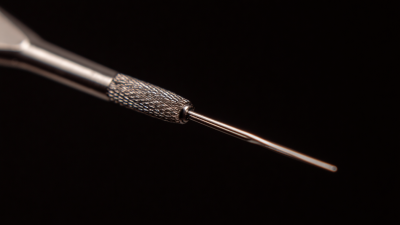
For 2026, needle selection will likely focus on curvature, point geometry, alloy quality, and coating consistency. Three-eighths-circle needles remain practical for many soft-tissue procedures. Half-circle needles offer deeper access in confined fields. Reverse-cutting and taper-point designs serve different tissue behaviors. The correct choice depends on anatomy, handling technique, and procedure risk. Small details matter. A blunt needle can reduce accidental penetration, while a sharper point may improve passage through dense tissue.
Dr. Peter F. Edlich, a recognized wound-closure researcher, emphasized a core surgical principle: “The needle must be selected according to the tissue.” This practical view remains relevant for hospitals, distributors, and contract buyers. ISO-aligned manufacturing, documented tensile performance, controlled needle attachment, and validated sterilization should support every purchasing decision. Regulatory expectations also vary by destination, so buyers should verify current requirements with qualified specialists. Reports provide direction, not certainty. Real operating-room feedback still deserves weight. This guide compares the leading 2026 Suture Needles by design, use case, quality indicators, and procurement value, while acknowledging that no single needle type fits every market or procedure.

For 2026 global procurement, suture needles should be classified by point, curvature, shaft design, and attachment method. The point determines how tissue is entered. Taper needles separate fibers and suit soft tissue, bowel, vessels, and subcutaneous layers. Cutting needles slice dense tissue, while reverse-cutting needles place the cutting edge away from the wound surface. Blunt needles are used where accidental puncture risks must be reduced, especially in friable organs.
Curvature is usually described as 1/4, 3/8, 1/2, or 5/8 circle. A 3/8-circle needle offers practical control in open procedures, while a 5/8-circle profile helps reach deep or narrow spaces. Straight needles remain useful for accessible surfaces.
Buyers should also check whether the needle is swaged or eyed. Swaged needles reduce tissue drag and handling steps; eyed needles may support selected reusable workflows, but they can create more resistance.
Small details matter.
The CDC’s National Healthcare Safety Network identifies surgical-site infections as about 20% of healthcare-associated infections in the United States. WHO reports that infection risk can be substantially higher in low- and middle-income surgical settings. These figures do not prove that one needle type prevents infection, but they highlight the importance of consistent tissue handling, secure packaging, and verified sterilization.
In practice, classification is not always neat. A needle can match the tissue yet feel wrong in a surgeon’s hand. Global buyers should compare point geometry, curvature, tensile strength, and clinical feedback rather than relying on catalog labels alone.
Choosing a suture needle should begin with the procedure, not the catalogue ranking. The Lancet Commission estimated about 313 million major surgical procedures worldwide each year. That scale makes precise needle selection essential.
Taper-point needles suit bowel, vascular, and other soft tissues because they separate fibers with less tearing. Blunt needles can reduce accidental puncture risks in fragile organs, including the liver. They are not ideal for dense fascia.
Cutting and reverse-cutting needles work better for skin, tendon, and tough connective tissue. A conventional cutting edge can damage delicate tissue if pressure is excessive. Reverse-cutting designs place the cutting edge away from the wound margin, offering better resistance against pull-out.
Ophthalmic procedures may require fine, spatulated, or micro-point needles. Curved needles help surgeons work through limited spaces, while straight needles can support accessible surface closure.
The best choice still depends on tissue thickness, access, and surgeon technique.
Tips:
Match needle geometry with tissue resistance. Check curvature, diameter, and intended suture size. WHO’s Global Guidelines for Surgical Site Infection Prevention stress careful tissue handling and standardized surgical practice. Market analyses from Grand View Research also show continued growth in absorbable suture demand, reflecting broader use in internal closure. Yet a purchasing spreadsheet can mislead. Local outcomes should guide final selection. Review handling feedback, breakage records, and applicable regulatory instructions before large-volume buying.
Needle shape strongly affects access, visibility, and tissue control. A 3/8-circle needle suits open, shallow wounds. A 1/2-circle design works better in deeper cavities. A 5/8-circle needle can reach confined spaces, but it needs careful handling. Straight needles offer speed on accessible tissue. They are less useful in narrow fields.
Needle points matter just as much. Taper points separate tissue fibers and reduce cutting damage. Cutting and reverse-cutting points penetrate firm skin or fascia. Blunt points may reduce accidental puncture during delicate procedures. Small details matter.
Material affects strength, flexibility, and memory. High-quality surgical stainless steel should resist bending and corrosion during normal use. A needle that flexes slightly may pass smoothly. Excessive flexibility can reduce control. Surface finish and coating also influence penetration and drag.
Buyers should compare needle diameter, curvature, point geometry, and suture attachment. In procurement reviews, samples often perform differently from catalogue expectations. That is worth questioning.
Testing should include simulated tissue, force measurement, packaging inspection, and applicable regulatory documentation.
Tips: Match the needle to tissue, depth, and access, not price alone. Request batch samples before larger orders. Check needle visibility under operating lights. Review breakage and deformation data. Avoid assuming one shape fits every specialty. A practical choice may still need surgeon feedback.
In 2026, global buyers are focusing on procedure-specific suture needle selection. Curved needles remain practical for confined surgical fields. Straight needles can support accessible tissue closure and controlled handling. Taper-point needles are widely considered for soft tissue. Cutting and reverse-cutting needles suit tougher tissue, including skin and fascia. Spatulated designs may serve delicate ophthalmic procedures.
The strongest trend is precision, not simply a larger product range. Buyers increasingly compare needle geometry, point sharpness, curvature, material consistency, and attachment strength. Coated surfaces may improve smooth passage, but performance must be verified in actual clinical settings.
Packaging traceability is also gaining attention. Batch details, sterilization information, and clear labeling help reduce receiving errors across international supply chains. Sustainability matters too, although recyclable packaging does not automatically mean lower environmental impact.
Tips: Match the needle to tissue, access, and technique. Review samples with experienced clinicians before large orders. Ask for quality records, sterilization validation, and dimensional tolerances.
Check storage conditions and delivery reliability, not only unit price. A cheaper needle can create hidden handling costs. Small details matter.
Some buyers may overvalue new coatings or unusual shapes. That deserves reflection. Familiar designs can still provide the best consistency when training, evidence, and supply stability are priorities. Supplier evaluation should remain evidence-based and aligned with local medical-device requirements.
For 2026, global buyers should compare needle types by clinical use, not popularity.
Reverse-cutting needles suit tough tissue and resist edge tearing.
Taper-point needles pass smoothly through soft tissue.
Blunt needles can reduce accidental puncture risks in selected procedures.
Spatulated needles may support precise ophthalmic or delicate tissue work.
Fit matters. Buyers should examine curvature, diameter, point geometry, needle attachment, and suture tensile strength. A sample inspection under magnification can reveal rough edges, uneven coatings, or weak needle-suture junctions. These small defects may affect handling during a long procedure.
Quality evidence must connect with compliance evidence. Request batch traceability, sterilization validation, packaging integrity tests, shelf-life data, and biocompatibility records. Check whether the supplier maintains a certified medical-device quality system and meets the destination market’s registration requirements. Do not accept a certificate without checking its scope and validity.
A low unit price can still create higher landed costs through rejected lots, delayed customs clearance, or excessive breakage. Compare total cost per usable unit. Include freight, inspection, storage, and disposal expenses. Contract terms should define sample approval, corrective actions, and replacement timelines.
A checklist helps, but it is not perfect. Human review still matters. One overlooked packaging seal can weaken an otherwise strong purchasing decision.