You have successfully logged out.

2026 How to Choose the Right Ankle Splint?

Choosing the right Ankle Splint in 2026 is not simply a matter of picking the most expensive model. Your injury, walking pattern, swelling, footwear, and recovery stage all influence the decision. A sprained ankle may need controlled support, while chronic instability often requires a different design. Even mild pain deserves attention when it changes how you walk.

A useful choice begins with a clear assessment. A healthcare professional can check ligament stability, circulation, skin condition, and possible fractures. Product guidance, clinical experience, and reliable manufacturer information should support that decision. Look for a secure fit, breathable materials, adjustable straps, and enough flexibility for normal movement. The splint should feel supportive, not painfully tight. Check your toes after wearing it; unusual numbness, discoloration, or increasing pain requires prompt review. Small details matter.

Not every popular splint suits every ankle. Some bulky braces fit poorly inside work shoes. Some lightweight sleeves offer comfort but limited stability. I once underestimated how much swelling can change the fit during a single day. That mistake is easy to repeat. Measure your ankle according to the brand’s instructions, then reassess the fit after walking, resting, and elevating your leg. This guide explains practical features, common design differences, fitting checks, and questions worth asking before purchase. It cannot replace medical evaluation, especially after a fall, severe swelling, visible deformity, or inability to bear weight. When comfort and protection conflict, safety should lead the decision.
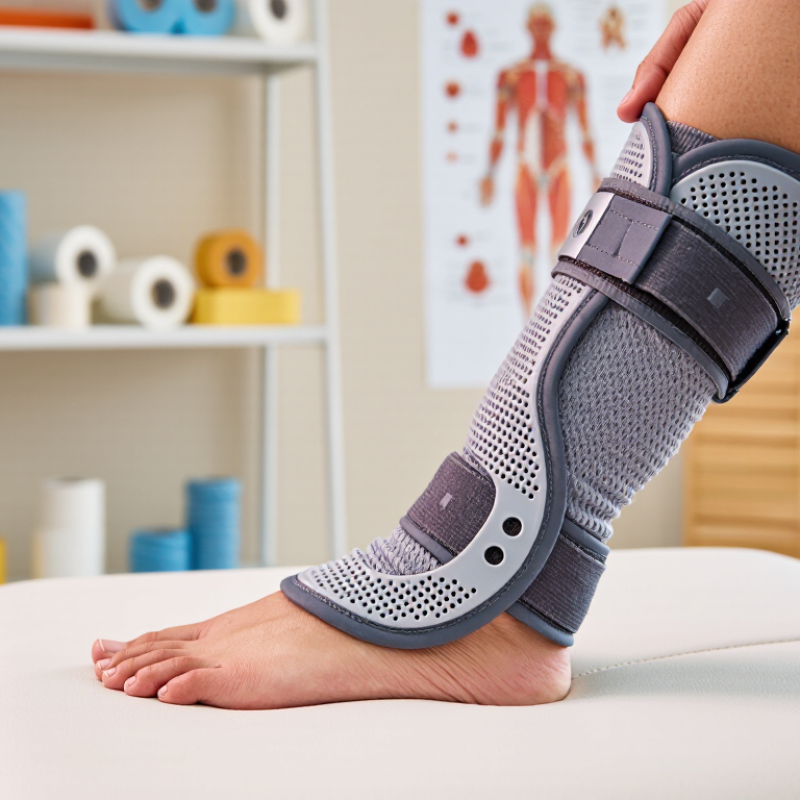
2026 How to Choose the Right Ankle Splint?

Identify the Ankle Condition and Support Goals

2026 How to Choose the Right Ankle Splint?

Identify the ankle condition before choosing support. A recent sprain may need controlled movement, compression, and protection during walking. Chronic instability may require firmer side-to-side support. Tendon irritation often benefits from limiting painful motion without completely immobilising the joint. A fracture, severe swelling, deformity, or suspected ligament rupture needs professional assessment before selecting a splint. Do not guess.

Your support goal matters just as much. For daily walking, a lightweight brace may provide comfort and confidence. For sport, look for stable straps, a secure heel position, and enough flexibility for safe movement. Check the skin after ten minutes. Red marks, tingling, cold toes, or increased pain suggest a poor fit. A tighter splint is not always better. That assumption can be wrong. A medical professional should guide use after surgery or serious injury.

Tips: Measure the ankle when swelling is lowest, but expect its size to change. Wear the same sock used during activity. Walk slowly on a flat surface before longer use. Keep the foot supported, not squeezed. Recheck comfort after removing the splint. Small details matter. If pain, numbness, unusual colour, or swelling worsens, stop using it and seek qualified medical advice. Even a well-fitted splint cannot replace diagnosis, rehabilitation, or gradual strength training.

Compare Ankle Splint Types and Their Stabilization Levels

2026 How to Choose the Right Ankle Splint?

Compare Ankle Splint Types and Their Stabilization Levels

Choosing an ankle splint starts with the movement you need to control. A soft compression sleeve offers light support and warmth. It may suit mild swelling, daily walking, or recovery after minor strain. However, it cannot prevent strong side-to-side motion. A lace-up splint adds adjustable compression and moderate stabilization. It fits inside many shoes and works well during routine activity. The fit must feel secure, not restrictive.

Rigid stirrup splints use side shells to limit inversion and eversion. They provide stronger stabilization after an ankle injury. Many designs still allow the foot to move forward and backward. This balance can support walking while reducing unwanted twisting. A walking boot offers the highest restriction among common ankle supports. It may be appropriate for more serious injuries, but professional assessment is important. More protection is not always better.

Match the splint to the injury, activity, and recovery stage. A runner may need controlled support on uneven ground. Someone with swelling may need adjustable straps and room for a sock. Check for numbness, unusual color, pressure marks, or increasing pain. Remove the splint and seek medical advice if these symptoms appear. An overly tight support can create problems. That detail is easy to miss. Stabilization levels also vary between people, so reassessment matters when walking improves or pain changes.

Match Splint Features to Activity, Comfort, and Mobility Needs

2026 How to Choose the Right Ankle Splint?
Match Splint Features to Activity, Comfort, and Mobility Needs

The right ankle splint should match your daily movement, not only your injury label. A firm brace may suit walking after a sprain, while a flexible sleeve may support light exercise. Check whether you need stability, compression, or motion control. Your clinician or physiotherapist can help assess swelling, pain, and safe movement. Fit matters too. The splint should feel secure without causing numbness, cold toes, or skin discoloration. Walk across a room before wearing it outdoors.

Tips: Match the splint to your activity. Choose a low-profile design for work shoes, a stronger support for uneven trails, and adjustable straps for changing swelling. Try it with your usual socks and footwear. Observe your gait. If the brace makes you limp, it may be too rigid, too loose, or simply unsuitable. Clean, dry materials can improve comfort during longer use, especially in warm weather.

Comfort is not a minor detail. Poor padding can create pressure near the heel or ankle bones. A breathable fabric may reduce moisture, but it cannot fix an incorrect size. Recheck the fit after several minutes of walking. I have found that people often focus on maximum support and overlook mobility. That choice can slow natural movement. Still, personal comfort is not proof of medical safety. Stop using the splint and seek professional advice if pain increases, swelling worsens, or circulation changes.

Check Fit, Sizing, Materials, and Ease of Adjustment

2026 How to Choose the Right Ankle Splint?

A well-fitted ankle splint should feel supportive, not painfully tight. Measure your ankle and foot according to the manufacturer’s instructions. Compare those measurements with the size chart, rather than guessing from your shoe size. A splint that slips may fail to control movement. One that leaves deep red marks may restrict circulation. Check your toes after several minutes. They should remain warm, normally colored, and comfortable.

Fit depends on the injury and the activity. A rigid splint can limit motion after a serious sprain, while a flexible brace may suit mild instability or daily walking. Materials also affect comfort. Breathable fabric helps reduce sweat, while padded edges can protect sensitive skin. However, soft padding does not always mean better support. Inspect stitching, hinges, and fasteners before regular use. Small defects can become irritating during movement.

Adjustment should be simple enough to manage with one hand. Straps that loosen during walking need attention. Test the splint indoors for ten to fifteen minutes, then check for pressure points. I have found that people often tighten braces too much when pain continues. That can create numbness without improving stability. Pain, swelling, tingling, or color changes require removal and professional advice. Personal comfort matters, but it should not replace guidance from a qualified clinician.

2026 How to Choose the Right Ankle Splint? - Check Fit, Sizing, Materials, and Ease of Adjustment

Splint Type Recommended Support Level Fit and Sizing Checks Common Materials Ease of Adjustment Important Considerations
Lace-Up Ankle Splint Moderate
Suitable for mild to moderate instability, routine activity, and sports support.
Measure the ankle or foot circumference according to the product's sizing chart. The heel should remain centered, while the toes should move freely without pressure. Usually made with breathable fabric, synthetic leather, foam padding, and textile laces or straps. Highly adjustable. Tension can be changed across different parts of the ankle, but tightening may take longer than using hook-and-loop straps. Provides a close, supportive fit. Check that the laces do not create numbness, tingling, skin discoloration, or cold toes.
Stirrup Ankle Splint Moderate to High
Designed to limit excessive side-to-side ankle movement.
The side supports should sit alongside the ankle bones without pressing directly into them. The foot should remain flat and stable inside the splint. Commonly uses semi-rigid plastic side shells, foam liners, air cells, fabric covers, and hook-and-loop straps. Generally easy to adjust. Straps allow quick tightening or loosening, even when wearing athletic footwear. A bulky design may not fit comfortably in narrow shoes. Check for rubbing around the ankle bones and heel.
Rigid Hinged Ankle Splint High
Useful when strong stabilization is needed while allowing controlled forward and backward movement.
The hinge should align approximately with the ankle joint. The splint must not shift during walking or create pressure at the calf, heel, or ankle bones. Often constructed from molded plastic or composite supports with foam, fabric, and padded liners. Usually adjustable through straps or removable liners. Correct alignment may require professional fitting. Offers substantial control but may restrict movement and increase shoe size requirements. Follow clinical guidance after significant injury or surgery.
Elastic Compression Sleeve Low
Appropriate for light compression, mild swelling, and general proprioceptive support.
Select the size using the specified ankle or foot circumference. It should feel snug but should not cause numbness, tingling, increased pain, or color changes. Typically made from knitted elastic fibers, nylon, polyester, spandex, or a blend of textile materials. Very easy to put on and remove, but it provides less fine-tuning than a strap-based splint. Check the top and bottom edges for rolling or tight bands. It is not intended to replace rigid support for major instability.
Figure-Eight Ankle Strap Low to Moderate
Provides targeted support for mild instability and activity-related discomfort.
The strap should cross the ankle securely without cutting into the skin. The heel should remain uncovered or comfortably positioned, depending on the design. Common materials include woven elastic, neoprene, nylon, foam, and hook-and-loop fasteners. Easy to adjust and usually faster to apply than a lace-up model. Adjustment precision depends on strap width and fastening position. A narrow strap may create pressure points. Avoid placing fasteners directly over irritated skin or open wounds.
Night Ankle Splint Positioning Support
Intended to maintain a selected ankle or foot position during rest, when clinically recommended.
Confirm that the heel is fully seated and that the foot is not forced into a painful position. The splint should remain stable without excessive compression. Usually combines a rigid or semi-rigid frame, padded fabric, foam, and adjustable straps. Moderate. Straps are usually adjustable, but the overall position may require careful setup. Comfort is especially important for prolonged wear. Stop use and seek advice if pain, skin damage, numbness, or circulation changes occur.
Post-Injury Walking Splint Very High
Used when substantial protection and reduced ankle motion are required under professional direction.
Sizing commonly depends on foot length, shoe size, and calf or ankle dimensions. The foot should sit fully inside the base with even weight distribution. Often uses a rigid plastic shell, padded liner, molded sole, foam, and multiple adjustable straps. Easy to tighten with straps, but fit and walking technique may require instruction from a healthcare professional. Heavier and bulkier than athletic braces. Confirm whether the device is appropriate for weight-bearing and follow the prescribed wearing schedule.
Adjustable Air-Cushion Splint Moderate to High
Provides lateral support with customizable cushioning for some acute or chronic ankle conditions.
The air cushions should contact the ankle evenly without creating concentrated pressure. Adjust the air volume gradually while standing or walking only as permitted. Commonly includes semi-rigid shells, inflatable air cells, foam, mesh fabric, and hook-and-loop straps. Adjustable, but changes should be gradual. Overinflation can reduce comfort and may increase pressure on soft tissue. Inspect the air cells and valves for leakage. The design may be unsuitable for people who cannot reliably monitor skin sensation or circulation.

General fit rule: An ankle splint should feel secure without causing pain, numbness, tingling, skin discoloration, or increased swelling. Always compare measurements with the specific product sizing chart because size ranges and construction differ between manufacturers. Seek professional advice after a suspected fracture, severe deformity, inability to bear weight, or persistent symptoms.

Evaluate Safety, Maintenance, and Professional Guidance Before Buying

An ankle splint should support movement without creating new pressure points. Safety starts with an honest assessment of your injury. Swelling, numbness, broken skin, or unusual color needs professional attention. Do not treat a splint as a diagnosis. A licensed clinician can check stability, circulation, and the right level of support. They can also explain whether rigid or flexible support suits your condition.

Fit matters more than impressive features. Your heel should stay seated, while straps hold the ankle firmly without cutting into skin. Walk a few steps on a clean floor. Pain, tingling, or rubbing means the fit needs review. I once underestimated how quickly swelling changed comfort. That small oversight taught me to reassess fit later, not only at purchase. A professional fitting may prevent similar mistakes.

Tips: Check your skin after each early use, especially around the heel and ankle bones. Keep the splint dry unless its care instructions allow washing. Remove dirt with mild soap, then let it air-dry fully. Inspect seams, fasteners, and padding for wear. Avoid modifying straps, even when they feel inconvenient. Ask a healthcare professional how long to wear it and whether exercises are appropriate.

2026 How to Choose the Right Ankle Splint?

Evaluate safety, maintenance, and professional guidance before buying.

This evidence-informed checklist groups the main points to verify before purchase. Safety receives the highest priority because the splint should fit securely without causing excessive pressure, numbness, skin irritation, or restricted circulation. Maintenance covers cleaning, drying, inspection, and replacement of worn components. Professional guidance is especially important after injury, surgery, persistent pain, or when circulation and sensation may be affected. Scores represent the number of practical checks in each category, not clinical outcome measurements.